Sacred Andean Textiles
Weavings, Mesa Cloths, and Their Meanings
The Spiritual Significance of Weaving in Andean Culture
Weaving is far more than a craft in Andean culture; it is a sacred art, a form of prayer, and a primary vehicle for encoding and transmitting knowledge, spiritual teachings, and cultural identity. For thousands of years, Andean peoples have used textiles to tell stories, to express spiritual understanding, to mark social status, to honor the sacred, and to maintain connection with tradition across generations.
The significance of weaving in Andean civilization can scarcely be overstated. Archaeologists have noted that pre-Columbian Andean cultures placed even greater value on fine textiles than on gold or other precious metals. Textiles served as currency, as diplomatic gifts, as ritual objects, and as the primary means through which artistic and spiritual expression occurred. The finest weavers held high social status and were often supported directly by rulers and religious authorities.
Weaving as Prayer and Meditation
From the perspective of the weaver, the act of weaving is itself a spiritual practice. As one sits at a loom, repeating the rhythmic motions of threading and weaving, the mind enters into a meditative state. Many weavers describe the experience as a form of moving prayer, where intention, consciousness, and love are literally woven into the cloth. The repetitive, rhythmic nature of weaving naturally induces an altered state of consciousness in which connection to spiritual dimensions becomes accessible.
Traditional weavers often sing or chant as they work, infusing their songs—which may carry prayers, blessings, or teachings—directly into the cloth. The cloth itself becomes a repository of the weaver’s consciousness and intention. A textile created with love and conscious intention carries a quality of energy that can be felt by those who encounter it.
Weaving as Cosmological Expression
Andean textiles encode cosmological knowledge in their patterns and colors. The designs are not merely decorative but represent profound understanding of the structure of reality, the relationships between beings, and the sacred principles that govern existence. A trained person can “read” an Andean textile much as one reads text, extracting knowledge and teachings encoded in its patterns.
The act of weaving itself is understood as a participation in the cosmic creative process. Just as the universe is woven together from various threads of energy and consciousness, the weaver participates in this cosmic weaving by creating textiles. This understanding lends sacred significance to even the most utilitarian weaving.
The Mesa Cloth: Mestana and Its Sacred Symbolism
The mestana (also called manta) is a sacred textile specifically designed and created for use as a mesa cloth—the cloth that wraps and contains the mesa (medicine bundle or portable altar). The mestana is one of the most important and potent objects in Andean shamanic practice.
Physical and Energetic Structure
A complete mestana arrangement typically consists of several layers of cloth. The outer cloth is usually larger and serves as a boundary between the mesa’s sacred space and the external world. Inside the outer cloth are smaller cloths (unkunas or wachalas) that further organize and protect the mesa’s contents. These layered cloths create a three-dimensional mandala of sacred space.
The layers of cloth carry symbolic significance: the outer cloth represents the outer world and one’s everyday life; the intermediate layers represent increasingly interior or hidden dimensions; and the innermost cloths represent the place where soul and cosmos meet, where personal and transpersonal consciousness merge.
The Symbolism of Color and Design
The colors and designs of a mestana are carefully chosen and carry specific meanings. The most common color scheme includes:
- Black stripes: These represent Pachamama (Mother Earth) and the earth element, as well as the fertile darkness from which new life emerges.
- Rainbow or multicolored stripes: These represent the balance and integration of all elements and all aspects of existence, the unity within diversity, and the wholeness toward which spiritual development aims.
- White or neutral tones: These represent clarity, light, and the refined spiritual dimension.
- Red or deep tones: These represent the vitality, blood, and life force of creation.
The geometric patterns woven into many mestanas are understood as sacred geometry—mathematical relationships that reflect the underlying structure of reality. Intricate diamond patterns often represent Inti (the sun) with its radiating light. Angular, stepped patterns represent the mountains and the connection between earth and sky. Wavy patterns represent water and the flow of energy.
The Mesa Tie
The mestana is usually bound with a cord or ribbon called a mesa tie, which holds the folded cloth together and keeps it closed when not in use. This binding symbolizes how the many elements of the mesa are held in right relationship, just as spirit, heart, and body are bound together in a harmonious human being. The act of tying and untying the mesa marks the transition between sacred work and everyday time.
Common Motifs and Their Sacred Meanings
Andean textiles employ a rich vocabulary of recurring symbols and motifs, each carrying specific meanings that are understood across the Andean region and across centuries.
Inti (The Sun)
The sun is represented in various ways, most commonly as a rayed diamond or circle with radiating lines. Inti represents the source of light, consciousness, life, and divine illumination. Inti is associated with clarity, truth, and the masculine principle of giving and illumination. The presence of solar motifs in a textile indicates that it is meant to bring clarity and blessings.
The Apus (Mountains)
Mountain motifs, often depicted as triangular forms or stepped patterns, represent the mountain spirits and the sacred connection between earth and sky. Mountains symbolize stability, spiritual aspiration, and the presence of protective forces. Textiles incorporating mountain motifs are often used in ceremonies involving the Apus and in contexts where protection and stable grounding are needed.
Pachamama (Mother Earth)
The Earth Mother is represented through various motifs including serpentine patterns, earth-toned colors, and designs suggesting fertility and nurturing. Pachamama symbolizes abundance, support, and the sacred feminine principle. Textiles honoring Pachamama are used in ceremonies of gratitude and in work focused on healing and nourishing.
The Chakana (Andean Cross)
The Chakana, or Andean Cross, is a sacred symbol representing the integration of the three worlds and the four cardinal directions. Chakana motifs in textiles represent wholeness, balance, and the cosmic order. A textile incorporating the Chakana is understood to support the integration and balance of all aspects of one’s being.
The Serpent (Amaru)
Serpentine patterns represent the amaru (serpent) and symbolize transformation, deep wisdom, sexuality, and the power of descent into hidden knowledge. Serpent motifs indicate that a textile is meant to support work involving transformation, healing of deep patterns, and access to subconscious wisdom.
The Condor
Designs depicting the condor or bird motifs represent the upper world, higher consciousness, vision, and the capacity to see from an expanded perspective. Textiles with condor imagery are often used in ceremonies involving connection to higher guides and spiritual realms.
Rhombi and Diamonds
Diamond and rhomb shapes represent multiple concepts: the womb, fertility, the sun, the four directions, and the integration of opposing forces. These fundamental shapes appear in countless variations throughout Andean textiles and represent the underlying sacred geometry of creation.
Stepped Patterns
Stepped or zigzag patterns represent mountains, the path of spiritual ascent, the movement of water, and the integration of different levels. These patterns indicate that a textile is connected with spiritual development and evolutionary growth.
Regional Weaving Styles and Traditions
Andean textile traditions vary regionally, with different communities developing distinctive styles that reflect their specific spiritual traditions, geographical environment, and cultural history. Several major weaving traditions remain active in the contemporary Andes.
Q’ero Weaving Tradition
The Q’ero, the highland Quechua community living in the highest mountains above Cusco, are renowned for their exceptional weaving. Q’ero textiles are characterized by vibrant, saturated colors (achieved through natural dyes), precise technical execution, and designs incorporating traditional Q’ero motifs such as the rayed sun, multicolored stripes, and sacred geometric patterns.
Q’ero weavers maintain techniques that have been passed down for centuries, often working with natural plant-based dyes and working looms similar to those used centuries ago. Q’ero textiles are highly valued for their spiritual potency and are used in mesas and sacred work throughout the Andes and beyond. The weavers often speak of infusing their spiritual intention and prayers directly into the cloth as they work.
Chinchero Weaving Tradition
Chinchero, located in the Sacred Valley not far from Cusco, is famous for its weaving tradition and is a living center of Andean textile arts. Chinchero textiles are characterized by bold colors, intricate designs, and the integration of both traditional Andean motifs and contemporary themes. Chinchero weavers often work in cooperative groups, maintaining traditional techniques while also adapting designs to contemporary markets.
Chinchero mestana cloths used in mesas are particularly renowned for their power and beauty. The community maintains strong connections to traditional practices while also being more accessible to outsiders and contemporary practitioners than some more isolated weaving communities.
Pisac Weaving Tradition
Pisac, another major weaving center in the Sacred Valley, produces textiles known for their intricate patterns and high technical quality. Pisac weavers often specialize in both traditional and innovative designs, and the community has become an important center for the preservation and evolution of Andean textile traditions. Pisac textiles are used in ceremony and spiritual practice throughout the region.
Other Regional Styles
Throughout the Andes, numerous other communities maintain distinctive weaving traditions. Weaving communities in Bolivia, in Ecuador, and in other regions each have developed styles reflecting their particular spiritual and cultural context. The diversity of Andean textile traditions represents thousands of years of accumulated knowledge and artistic development.
The Role of Textiles in Ceremony and Spiritual Practice
In Andean ceremony and spiritual practice, textiles serve multiple functions and carry profound significance.
Sacred Space and Boundaries
When a textile is spread on the ground, it creates a boundary and demarcates sacred space. The act of spreading a mestana before working with a mesa is understood to create a container for sacred work and to separate the sacred space from the mundane. The colors and patterns of the textile help establish and hold the energetic frequency appropriate for the work.
Recording and Transmission of Knowledge
Textiles serve as repositories of knowledge and teaching. The designs encode spiritual and practical information that can be transmitted through the textile itself and through the act of studying and understanding the patterns. A student of Andean tradition learns to “read” textiles and to extract teachings from their patterns and colors.
Energetic Amplification
A high-quality sacred textile, particularly one that has been created with conscious intention and spiritual practice, carries refined energy that can amplify and support spiritual work. When using a sacred textile in ceremony, the energy of the textile combines with the intention and energy of the practitioner, creating a more powerful container for transformation.
Ritual Clothing and Adornment
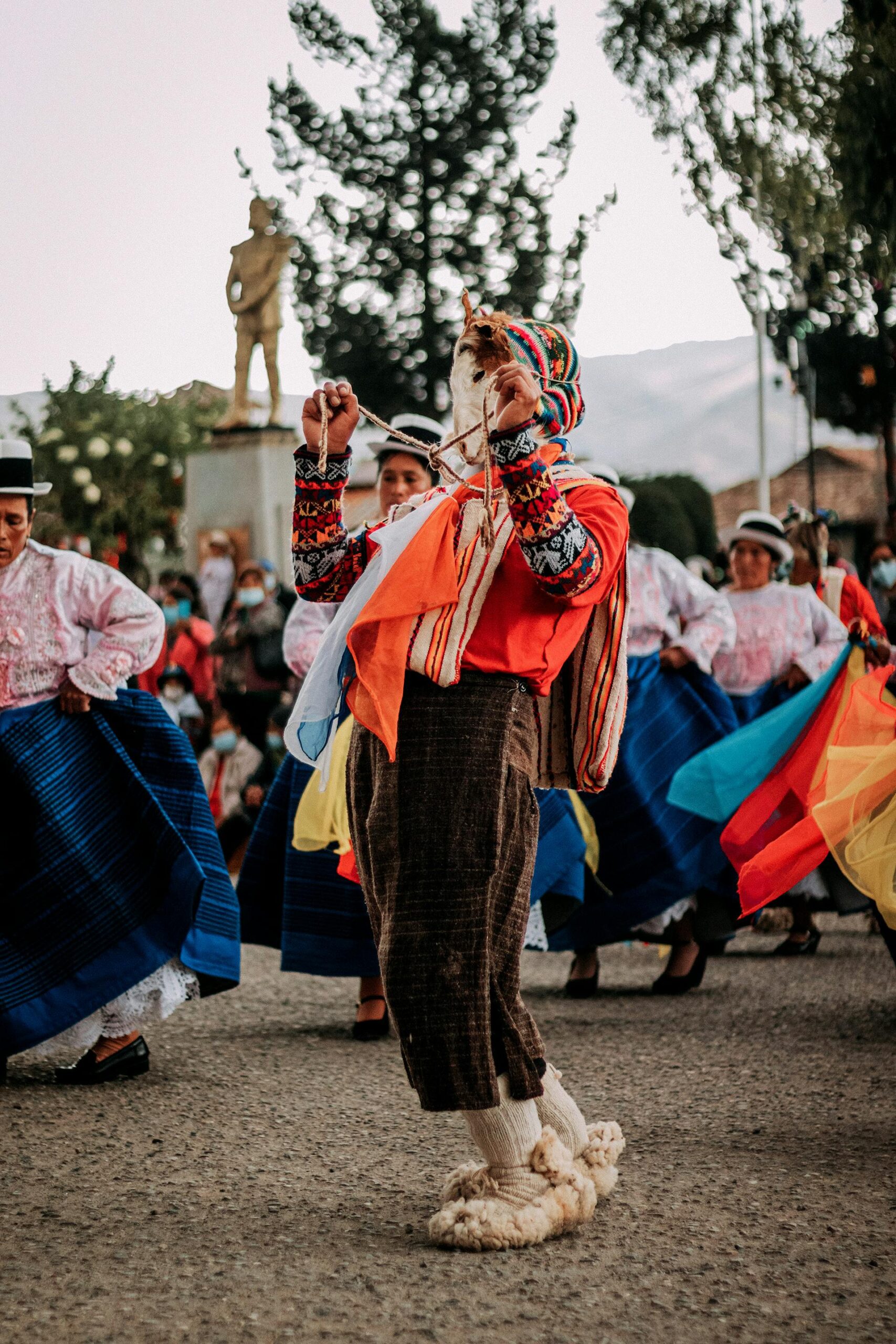
In ceremony and festival contexts, Andean peoples wear traditional textiles that mark their identity, status, and spiritual commitment. The act of wearing sacred textiles is itself a form of spiritual practice and prayer, a public declaration of connection to tradition and to sacred principles.
Preservation of Weaving Traditions
In the contemporary world, Andean weaving traditions face challenges from industrialization, economic pressures, and the attraction of younger generations to modern forms of work. At the same time, there is growing appreciation for and interest in authentic Andean textiles, both as spiritual objects and as artistic creations of exceptional quality.
Community Efforts
Many Andean weaving communities have established cooperatives and organizations dedicated to preserving traditional techniques, supporting weavers economically, and transmitting knowledge to younger generations. These efforts recognize that weaving is not merely an economic activity but a cultural and spiritual practice essential to the maintenance of Andean identity and spirituality.
Educational Initiatives
Some organizations and schools have been established to teach weaving to young people, ensuring that traditional knowledge and techniques are not lost. These efforts emphasize not only the technical aspects of weaving but also the spiritual significance and cosmological knowledge encoded in the textiles.
Fair Trade and Ethical Practice
Growing numbers of organizations work to ensure that Andean weavers receive fair compensation for their work and that weaving traditions are respected and honored. The principle of ayni (reciprocal exchange) is being applied in contemporary contexts, ensuring that those who purchase sacred textiles do so in a way that supports and honors the weavers and their traditions.
Integration of Traditional and Contemporary
Some contemporary weavers and organizations are creatively integrating traditional techniques and knowledge with contemporary aesthetic sensibilities, creating textiles that honor the ancient traditions while remaining relevant and resonant for contemporary practitioners. This approach allows for the evolution of textile traditions while maintaining their spiritual and cultural essence.
Connecting Textiles to Cosmology
Understanding how Andean textiles connect to and express the cosmology of the Andes deepens one’s appreciation for these remarkable creations and for the wisdom they encode.
The Weave as Cosmic Principle
The very act of weaving—the interlacing of many threads to create an integrated whole—mirrors the structure of creation itself. Multiple beings, energies, and dimensions are woven together to create the cosmos. The weaver participates in this cosmic weaving, becoming a partner with the creative forces of the universe.
Colors as Vibrational Frequencies
In Andean understanding, colors are understood not merely as visual qualities but as vibrational frequencies that carry specific energetic properties. Natural dyes create colors that resonate with particular spiritual dimensions. The careful selection and combination of colors in a textile is understood as a tuning of the textile’s energetic frequency.
Patterns as Prayer and Teaching
The geometric patterns in textiles represent both mathematical relationships found in nature (sacred geometry) and spiritual teachings about the structure of reality. A person meditating on the patterns of a sacred textile, or weaving the patterns with intention, is simultaneously engaging with spiritual truths and accessing wisdom encoded in these forms.
Conclusion: Textiles as Living Tradition
Andean textiles represent one of the world’s great artistic and spiritual traditions. These remarkable creations are simultaneously functional objects, works of exceptional artistic beauty, and spiritual teaching tools. In their colors, patterns, and the intention of their creators, Andean textiles carry forward thousands of years of accumulated wisdom about how to live in harmony with the sacred, how to maintain balance in all things, and how to express the deepest truths of existence through visible, tangible form.
For contemporary practitioners of Andean spirituality, working with sacred textiles—whether by wearing them, meditating with them, or using them in ceremony—creates a direct connection with the wisdom lineage of the Andes and with the millions of women and men who have devoted their lives to perfecting this sacred art. Through textiles, the past speaks to the present, and ancient wisdom continues to guide and nourish those who approach these creations with respect and openness.