Spirit Animals
Sacred Beings of the Andean Tradition
The Sacred Trilogy: Kuntur, Puma, and Amaru
At the heart of Andean cosmovision lies the Sacred Trilogy—three animals that represent the fullness of creation, the integration of all dimensions of existence, and the path of wholeness that every conscious being must travel. These three sacred animals are kuntur (the condor), puma, and amaru (the serpent).
The Trilogy is far more than mythology or poetic symbolism. In Andean understanding, these three animals embody specific frequencies of consciousness, represent particular domains of power, and serve as allies and teachers for anyone walking the path of spiritual development. To understand the Trilogy is to understand the structure of existence itself and humanity’s place within that sacred order.
The Three Worlds and the Sacred Trilogy
The Andean cosmos is organized into three vertical levels—Hanan Pacha (upper world), Kay Pacha (middle world), and Ukhu Pacha (lower world)—and each level is represented by one of the three animals of the Trilogy.
Kuntur: The Condor of Hanan Pacha (Upper World)
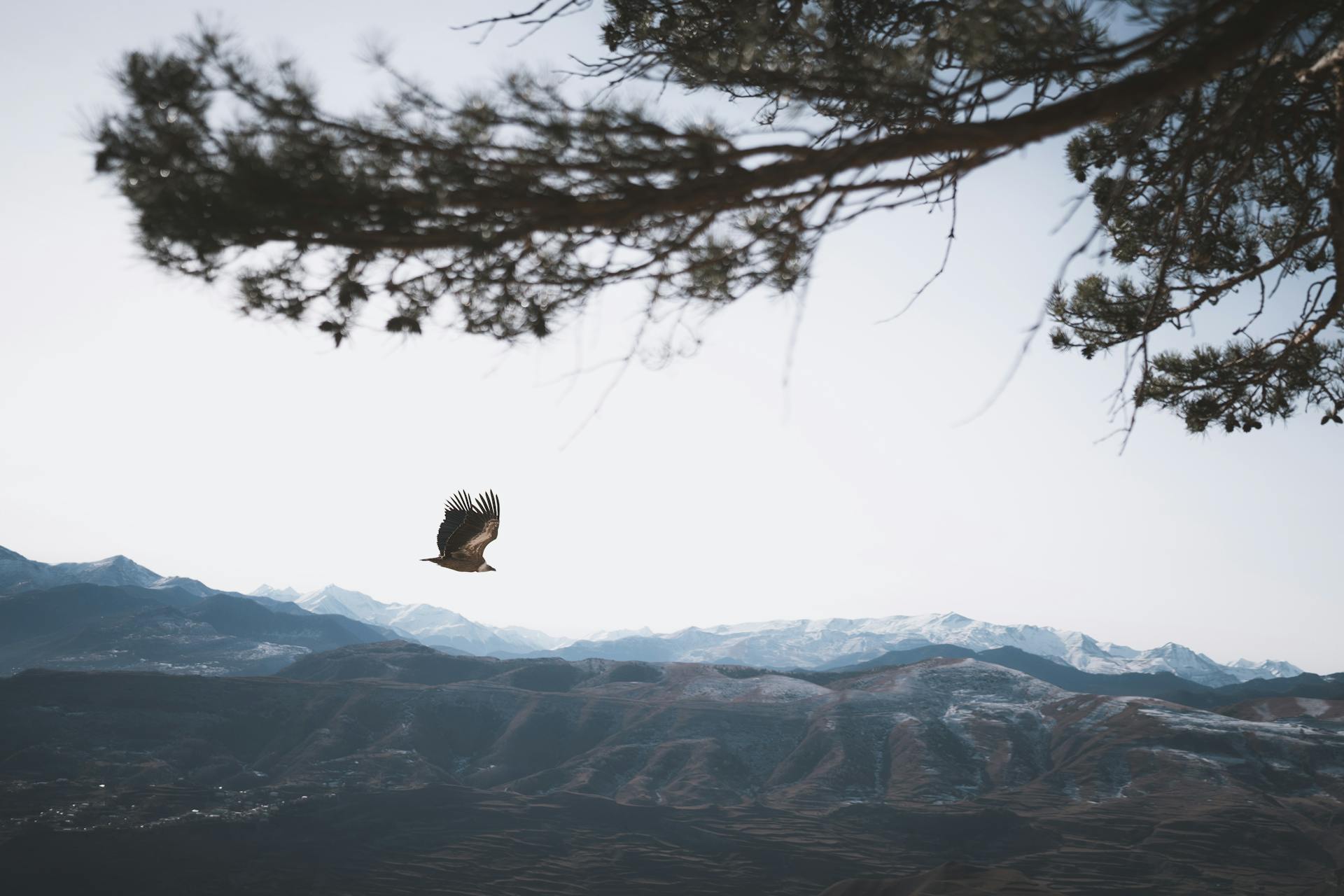
The condor, kuntur in Quechua, is the king of birds and the only creature capable of flying above the highest mountains of the Andes, soaring to heights of over 16,000 feet. In this lofty realm, the condor is closest to the sun, the stars, and the realm of the gods. The condor represents Hanan Pacha—the upper world of spirit, of divine consciousness, of vision, and of expanded awareness.
The condor embodies qualities of vision, clarity, divine perspective, and the capacity to perceive vast patterns and meanings. When working with kuntur energy, one develops the capacity to see the larger patterns in life, to transcend personal limitation, to access higher guidance, and to fly beyond the boundaries of ordinary perception. The condor medicine is the medicine of soaring, of freedom, and of communion with the divine.
The condor is associated with Inti, the sun, with the light of consciousness, and with the masculine principle of giving and illumination. In healing and spiritual development, kuntur represents the direction of ascension, of spiritual evolution, and of the soul’s journey toward greater consciousness and unity with the divine.
Puma: The Puma of Kay Pacha (Middle World)
The puma, the great mountain cat, is the dominant predator of the earthly realm—powerful, grounded, and fiercely present in the here and now. The puma represents Kay Pacha, the present world, the world of embodied human existence, where we live, work, love, and create.
The puma embodies qualities of power, courage, presence, and the capacity to act decisively and skillfully in the world. The puma is not distant or spiritual in an abstract sense but fully engaged with life, using its strength and intelligence to meet challenges and move through the world with confidence and grace. When working with puma energy, one develops personal power, the capacity to defend oneself and one’s values, and the ability to manifest one’s vision into tangible reality.
The puma is associated with the earth element, with the feminine principle of receptivity and nurturing, and with the heart of human life—relationships, community, and the daily work of survival and flourishing. In healing and spiritual development, puma represents the direction of grounding, of presence, and of embodying spirit in physical form.
Amaru: The Serpent of Ukhu Pacha (Lower World)
The serpent, amaru in Quechua, is the symbol of the hidden, the mysterious, and the deep subconscious. The serpent dwells in the lower realms, in darkness, in the soil, and in the hidden places of the earth. The amaru represents Ukhu Pacha, the inner and lower world—the realm of the unconscious, of ancestral memory, of death and rebirth, of transformation and healing.
The amaru embodies qualities of transformation, wisdom gained through initiation, the power of sexuality and fertility, and the capacity to shed old patterns and be reborn anew. The serpent moves close to the earth, sensing its vibrations and rhythms, deeply connected to the cycles of nature and the ancient wisdom encoded in matter itself. When working with amaru energy, one accesses the power to transform wounds into wisdom, to face one’s shadow, and to be reborn into new understanding and new ways of being.
The amaru is associated with water, the feminine principle of receptivity and wisdom, and with the deep knowing of the Earth. In healing and spiritual development, amaru represents the direction of descent, of introspection, and of accessing the deep wisdom found in facing and integrating one’s shadow.
Integration and Wholeness
The power of the Sacred Trilogy lies in the understanding that wholeness requires the integration of all three perspectives and capacities. A person who has only kuntur (vision without grounding becomes dissociative), or only puma (power without vision becomes oppressive), or only amaru (deep work without perspective becomes obsessive) is incomplete.
The Andean spiritual path involves learning to access and balance all three animal energies simultaneously. When condor, puma, and serpent work together within a person, that individual embodies the full spectrum of human potential: the vision to see what is possible, the power to manifest it in the world, and the wisdom to understand the deep patterns and transformations involved in growth.
Siwar Q’enti: The Royal Hummingbird and Soul Evolution
In Andean mythology and spiritual tradition, the siwar q’enti—the royal hummingbird—holds a special place as a guide and ally in the process of soul evolution and spiritual awakening. The story of how the siwar q’enti earned its royal title teaches profound lessons about the path of transformation.
The Story of the Royal Hummingbird
In ancient times, the hummingbird, small and seemingly insignificant, harbored a great desire to see Wiraqocha, the supreme creator deity who dwells in the Upper World. This was a privilege traditionally reserved for the kuntur (condor), the only creature believed capable of flying high enough to reach the presence of the divine.
But the clever hummingbird had an idea. By hiding beneath the great wings of the condor, the small bird secretly traveled to the Upper World. Once in the presence of Wiraqocha, the hummingbird flew out from beneath the condor’s wing, danced and buzzed with joy around the god, and finally landed on Wiraqocha’s right shoulder.
Upon seeing the face of the divine creator—upon gazing directly upon the consciousness of the cosmos itself—the hummingbird was transformed. What had been a small, ordinary hummingbird became siwar q’enti, the royal hummingbird, forever changed by the direct experience of the sacred.
The Path of Soul Evolution
The story of siwar q’enti is understood as an allegory of the soul’s evolutionary journey. Each person, however humble or seemingly insignificant, harbors within themselves the capacity and desire to awaken, to evolve, and to touch the divine directly.
The hummingbird’s strategy—using the power of the condor (the higher perspective, the vision) to reach what seemed unreachable—represents the wisdom of using available resources and seeking guidance from those further along the path. The hummingbird honors the condor while also boldly pursuing its own destiny.
Upon experiencing the presence of the divine, the hummingbird is forever changed. This represents the moment of awakening, the moment when consciousness recognizes itself as divine, when the soul remembers its true nature. This awakening transforms every subsequent moment; the individual can never return to ordinary consciousness once they have touched the face of Wiraqocha.
The Hummingbird as Psychopomp and Guide
The hummingbird is known for its unique capacity to fly in all directions—forward, backward, up, down, and in place—without having to change its body’s orientation. This makes the hummingbird an ideal navigator of multiple dimensions and realms. In Andean shamanic practice, the hummingbird is regarded as a psychopomp, a guide who can accompany shamans through journeys into different worlds and can guide souls in transition.
The hummingbird is particularly associated with the opening of the heart, with the capacity to drink deeply from the nectar of life, and with the joy and lightness that characterize enlightened consciousness. The hummingbird teaches that even small beings, moving with precision and presence, can touch the infinite.
The Apus: Mountain Spirits and Protectors
The Apus are the mountain spirits of the Andes—conscious, intelligent beings that inhabit and embody the mountains themselves. In Quechua, Apu means “Lord,” and the Apus are revered as powerful protectors, teachers, and allies by all who live in and work with the Andean mountains.
The Nature of the Apus
Each significant mountain has an Apu—a presiding spirit or consciousness that has accumulated wisdom and power over millennia. These beings are not abstract or distant but are understood as actively interested in the welfare of the people and lands within their domain. The Apus are often described as having human-like qualities and consciousness, though operating at a level of awareness and wisdom beyond ordinary human perception.
Different Apus have different characters and specialties. Some Apus are known as healers, others as warriors, some as teachers. Apu Salkantay, the highest peak in the region of Cusco, is one of the most renowned Apus and is often invoked in ceremony. Apu Ausangate is another powerful mountain spirit who watches over the Q’ero people.
Relationship and Reciprocity with the Apus
A fundamental principle in Andean spirituality is the maintenance of right relationship with the Apus through offerings and respect. Paqos regularly make despachos (offering ceremonies) to the Apus, honoring their power and asking for their assistance and blessing. In return, the Apus offer protection, guidance, and energetic support to those who maintain this reciprocal relationship.
The Apus can assist in healing, can offer protection during travel through dangerous mountain terrain, can provide guidance and wisdom in times of confusion, and can support spiritual development and awakening. Many practitioners experience direct communion with specific Apus, feeling their presence, receiving teaching, and being initiated or strengthened by their power.
Mountains as Sacred Teachers
In broader terms, all mountains in Andean cosmovision are understood as teachers and sacred beings. The very presence of the mountains—their stability, their height, their relationship to both earth and sky—teaches lessons about perseverance, aspiration, and the integration of earthly and spiritual dimensions.
Many Andean sacred sites are located on mountains or peaks, and pilgrimage to these sites involves not only physical exertion but spiritual communion with the mountain presence. The rigors of climbing at high altitude—the thinning air, the demanding physical effort—are understood as part of the initiatory process, stripping away ego and opening the heart to the mountain’s teaching.
Ñust’as: Female Nature Spirits and Feminine Power
While the Apus represent the masculine principle of mountain presence and protective power, the Ñust’as represent the feminine principle of nature—the flow of water, the cycles of fertility, the sweetness and nourishment of the earth. Ñust’a in Quechua refers to a beautiful woman or a princess, and the Ñust’as are understood as feminine beings of great beauty and power associated with water, flowers, and the fertile aspects of nature.
The Ñust’as are often located near water sources—springs, streams, and rivers—and are the presiding spirits of these vital sources of nourishment and life. Unlike the Apus, who are often experienced as strong and sometimes stern, the Ñust’as are more often perceived as gentle, nurturing, and creative. They represent the feminine principle of receptivity, nurturing, and the cycles of growth and regeneration.
Working with the Ñust’as involves invoking their support for fertility (in both literal and creative senses), for healing, for the opening of emotional depths, and for connection with the flowing, creative aspects of existence.
The Cosmic Beings: Mama Cocha, Mama Nina, Inti, and Mama Killa
Beyond specific mountains and water sources, Andean cosmovision honors several cosmic beings—universal forces of nature that exist throughout the world and that represent fundamental elements and dimensions of existence.
Mama Cocha: The Mother Water
Mama Cocha is the spirit of water itself—all oceans, rivers, and springs throughout the world. Water is understood as sacred, alive, and conscious. Mama Cocha governs emotions, flow, adaptation, and the capacity to dissolve boundaries and merge. Offerings to Mama Cocha honor the element of water and seek to maintain harmony with this vital life force.
Mama Nina: The Mother Fire
Mama Nina is the spirit of fire—the transformative, purifying, and activating force. Fire represents passion, will, transformation, and illumination. Mama Nina is invoked in ceremonies involving purification, transformation, and the activation of personal power. The sacred fire in ceremony represents the presence of Mama Nina, and offerings cast into fire are understood as being transmitted to the spirit realm through her transformative power.
Inti: The Father Sun
Inti is the sun, the supreme giver of light and life. Inti is honored as the source of warmth, consciousness, and vital energy. In Inca cosmovision, the Sapa Inca (emperor) was understood to be the son of Inti, and solar worship was central to Inca religion and culture. Inti is associated with masculine power, illumination, clarity, and the direct transmission of divine consciousness.
Mama Killa: The Mother Moon
Mama Killa is the moon, the feminine counterpart to Inti the sun. Mama Killa governs cycles, emotions, intuition, and the hidden dimensions of consciousness. The moon is associated with feminine power, fertility, the cycles of women’s bodies and of seasons, and the interior, emotional dimensions of existence. Regular observation of lunar cycles and honoring of Mama Killa is an important part of Andean spiritual practice.
Working with Spirit Animals in Andean Practice
The Andean tradition teaches that every person has relationships with particular animals and animal spirits that serve as allies, teachers, and helpers on their spiritual journey. Some of these relationships are discovered through direct experience or dream, while others are determined through divination or revealed by a teacher.
Discovering Your Power Animals
One might discover one’s power animals through vivid dreams, through repeated encounters with particular animals in waking life, through journeying with a shamanic practitioner, or through divination. The important principle is that the relationship is real and reciprocal—the animal offers its medicine and support, and the person offers respect, gratitude, and ethical living in return.
Invoking Animal Medicine
As one works with particular animals, one can invoke their medicine in times of need. Facing a challenge requiring courage? Call on puma. Needing to gain a broader perspective on a situation? Invoke condor. Requiring the wisdom to transform old patterns? Work with amaru. The animal spirits, when honored and worked with respectfully, become active allies in one’s life.
Integration and Balance
The deepest work with animal spirits involves integrating the medicine of multiple animals until one achieves a dynamic balance—embodying the strengths and perspectives of many rather than depending on a single ally. The goal is not just to work with spirit animals but to become a balanced expression of their collective wisdom, carrying within oneself the vision of the condor, the presence and power of the puma, and the transformative wisdom of the serpent.
Conclusion: Sacred Kinship with All Beings
The Andean understanding of animals and spirit beings reflects a worldview in which all creatures share consciousness and capacity for relationship. Animals are not resources to be exploited but kin to be honored, teachers offering their particular wisdom, and allies in the journey toward wholeness.
For contemporary practitioners of Andean spirituality, cultivating relationship with the animal spirits and cosmic beings of the tradition becomes a way of reconnecting with the sacred aliveness of creation and of accessing the medicine and wisdom these beings offer. Through this sacred kinship, one’s own consciousness expands, and one becomes increasingly aware of being part of an intelligent, conscious, interconnected cosmos.